
History Bites # 3 – Ode to Women
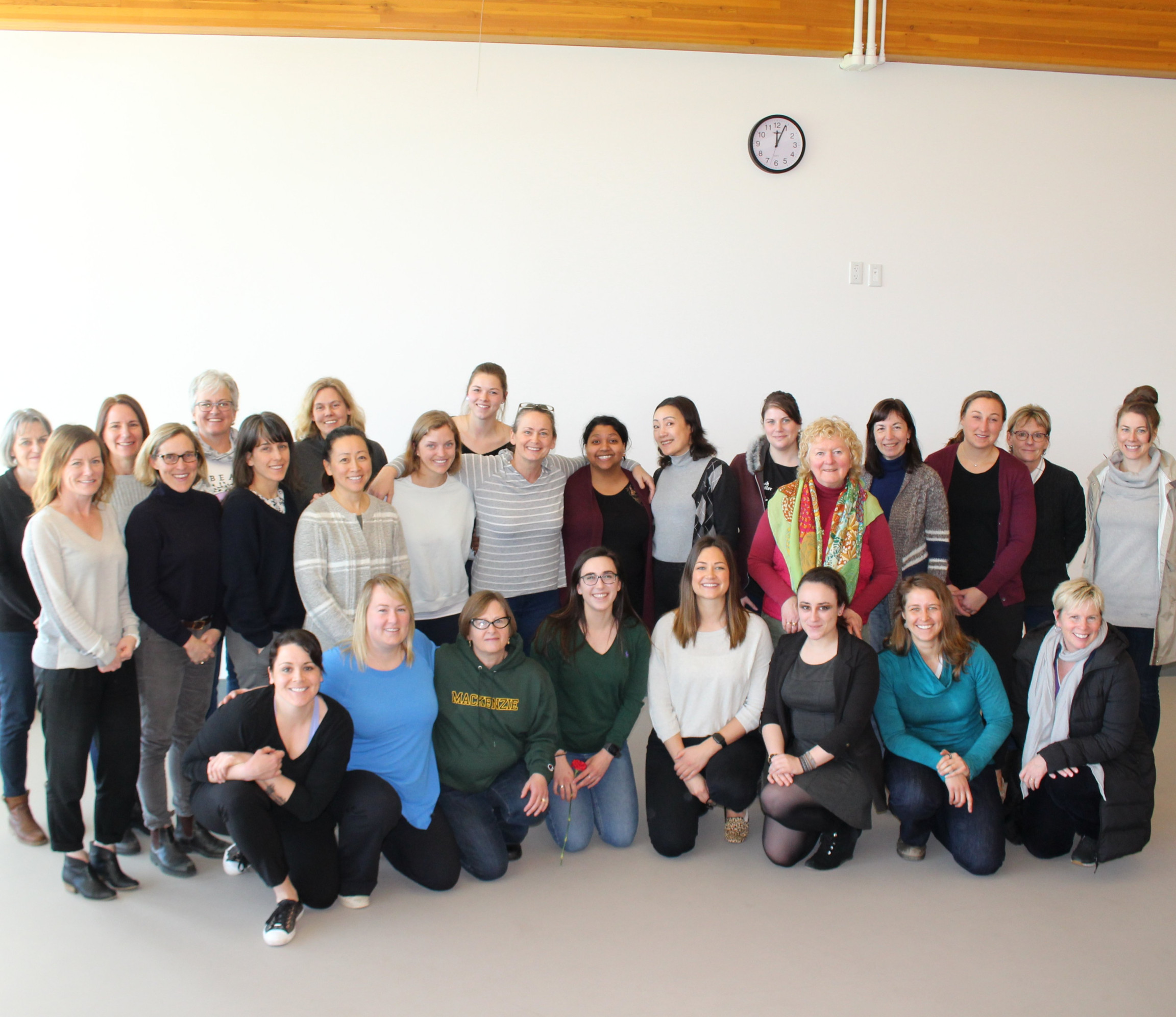
The following is the text of an address delivered by Mr Steve Cowie to the School in Assembly on Thursday, March 7, 2019. Women – You can’t live without them … We can’t live without them. March 8 is International Women’s Day, so on behalf of our school, I would like to use this Herstory Bite to express our gratitude to the women of Brentwood, past and present. It may seem presumptuous that I, a moustachioed male, should speak for women. But, like all of you, I have a mother, like many I have sisters (five in a blended family), like a few of you I have a wife and even fewer – a one year old granddaughter – all females. It is the women in my life who have taught me about compassion, kindness, generosity of spirit and love. They also provided the answer to that eternal question: what do women want? As “The Wife of Bath’s Tale” in Geoffrey Chaucer’s Canterbury Tales teaches us, it is the power to choose their own direction in life. This, it seems to me, is the important role of education, which should be offered equally to men and women. I am grateful to the remarkable female teachers and students (thousands of them) who have enriched my life for over forty years. In 1972, only a decade after Brentwood was re-established at Mill Bay, Head of School David Mackenzie initiated a bold and challenging move that, in the words of former Chair of the Board, Bruce Carlson, “transformed the culture of the school from the traditional British approach to one that was more progressive, creative and vibrant.” Nineteen courageous girls and their resolute Houseparent, Miss Ann Holden, were to make Brentwood the first independent boarding school in Canada to become co-educational. David Mackenzie was to call this controversial change the “highlight of his career” – this from a man who had played rugby for Scotland, run for Britain in the Olympics, flew for the RAF in WWII and become a Lieutenant Commander in the Canadian Navy. In his book Kindled from the Ashes, Nicholas Prowse describes the event in this way: “The excitement surrounding the arrival of the girls on campus did not necessarily mean that Brentwood was really prepared for them. In fact, ‘everyone learned as they went along’. Girl / boy issues (everything from relationships to punishments) were not addressed beforehand but rather worked out after the fact.” For example, caning continued for a few years but the girls were spared this archaic punishment right from the start although some of them said they would have preferred it to house chores. In those early years strong leadership from Ann Holden, Joyce Mackenzie and the first female teacher, Norah Arthurs, was essential but it also required exceptional student leadership which it got from, among others, Laurie Rutherford and Shannon MacEwing. Many years later Laurie recalled that the “grommets” (junior boys) were “cute” and the senior boys were “fun and charming”. In three years, the girls’ numbers rose to 63 out of around 300 students and their successful integration into the school was based on the willingness of each of these pioneers to participate fully in all of the programs, while winning over the skeptics among the boys and their overwhelmingly male teachers. Soon after I arrived at Brentwood, discussion began about adding girls in the junior school and I remember some staff members proclaiming that it would not work for all kinds of reasons, but it made sense to me and many others to continue to move in the direction of co-education. In 1978-79 Tammie Morrison became the first female Head Prefect. Nick Prowse describes her impact this way: “Known affectionately as “Mother Goose”, Tammie embodied all that was best about the strong, but compassionate and caring leadership Bill Ross wished to establish on campus.” Prowse calls the period from 1979 to 1982 the “break-though years” for our female athletes in volleyball, field hockey and rowing and a “golden era” in fine arts, especially drama. I recall one rugby Saturday at Shawnigan. All of the boys teams from the Mice to the Seconds lined the sidelines for the feature match between the First XVs. On one side, the Shawnigan supporters started a chant, “We’ve got spirit, yes we do. We’ve got spirit, how about you?” This chant went back and forth and then a message was passed while they were shouting across the way. When it came to be our turn we screamed, “We’ve got spirit, yes we do. We’ve got girls. How about you?” In 2001, Mrs. Andrea Pennells became the School’s first female Head of School – the only female Head of a BC independent school at that time. She had spearheaded many of the changes in the school’s approach to co-education that had come steadily through the nineties. In Nick Prowse’s words: “In a more balanced approach, more women were added to the faculty. The school steadily increased the numbers of girls in Grades 8 to 12 and the salad bar became a permanent fixture in the dining room.” In 2004, I was offered an opportunity to be a part of this co-educational process. A band of intrepid and hardy girls, led by Amy Van Vliet, had finally convinced our Head of Athletics to allow a girls’ rugby team and in the third term I was asked to coach them. I was to find out that the girls were every bit as tough and brave as the boys and I discovered that they were much more coachable, because, as fellow coach Jim Burrows was fond of saying, “Testosterone interferes with the hearing.” I still have a ball on my desk from the girls’ inaugural match against Kelsey on March 6, 2004, which they won 20-12. All of the girls signed it. That team went on to win the Tier 2 BC championships for two years running and the AA BC championships in 2009. The program is still flourishing with 26 girls currently involved in this collision sport. Now, as I look out at this assembly, I see a fully co-educational school with an equal numbers of boys and girls. I think back to those naysayers who argued that the girls would lose their voice in the classroom and the boys would feel threatened by high achieving and industrious girls in a learning environment that favored females. Those objections are clearly refuted by the evidence before me: I see an articulate and entertaining Head Prefect – with big hair – who is respected and appreciated by our entire community. I see boys and girls sharing the stage in key positions that value service. I hear announcements for mixed interhouse competitions, performances, special dinners and social events too varied to mention. I see talented and caring women in key leadership roles on faculty and staff. All of these aspects of our school make the single sex approach appear to be a remnant of the dark ages as we bask in the enlightenment. Women in our school have come a long way, as they have in society and, while there are still barriers to be overcome, largely the products of outmoded attitudes of sexism, conservatism and ignorance, I have every confidence that the women in this theatre, and the men who sit alongside them, are all moving together in the right direction towards a world of greater cooperation, acceptance and understanding. Women are the best. Thank you, women of Brentwood. Mr Steve Cowie, Social Studies Teacher, Rugby Coach, Ellis House Duty Master, Brentwood Historian & Raconteur


Where Students Choose To Be
+1 (250) 743-5521
admissions@brentwood.ca
info@brentwood.ca
2735 Mount Baker Road
Mill Bay, BC, Canada V8H 1K8