
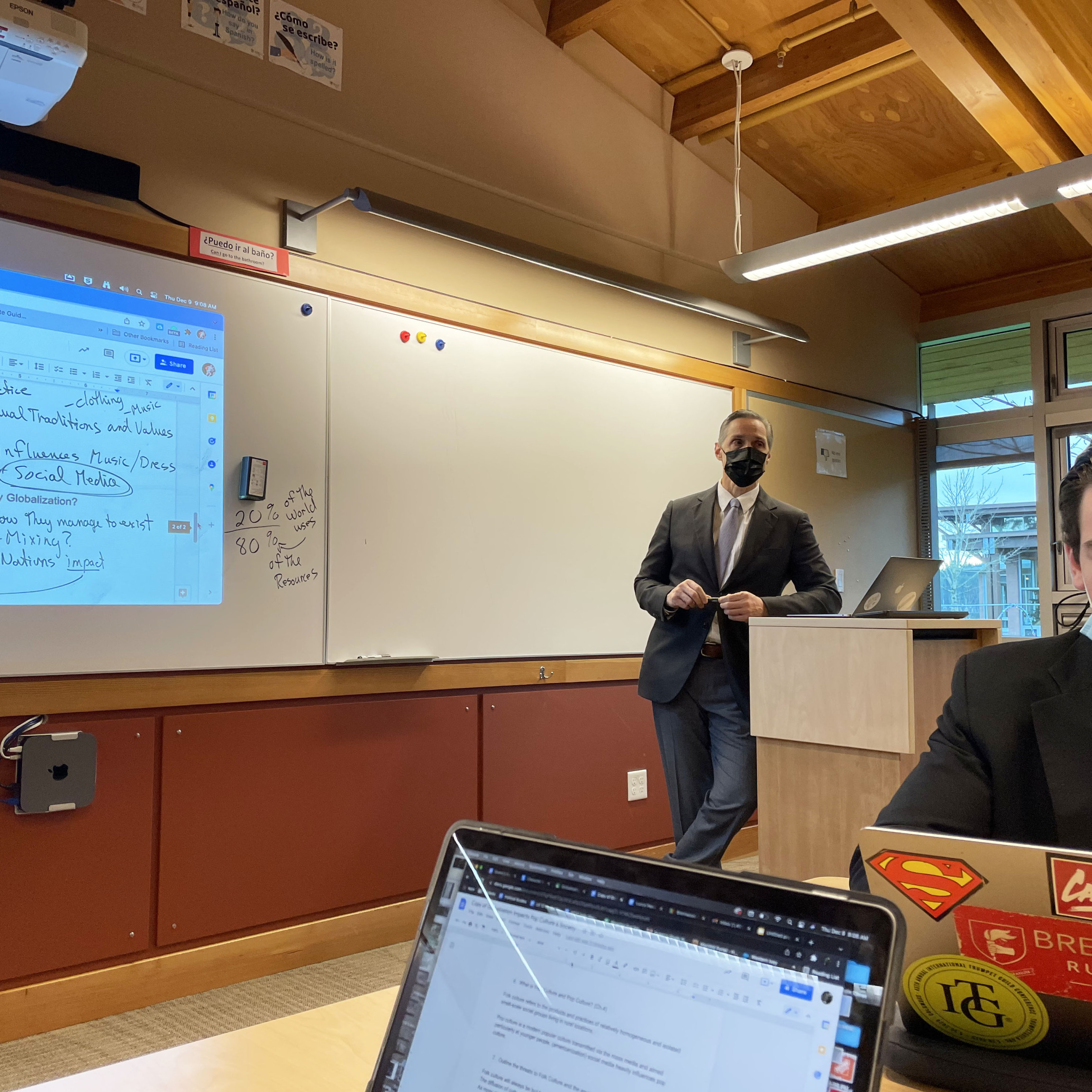
Comparative Cultures 12
Among the plethora of academic electives offered to senior students sits Comparative Cultures 12 in which students embrace various ways of interpreting different cultures. This leads to a broader understanding of the globalized world we live in today. The course identifies how culture is formed, developed, organized, and manifested as well as how it adapts to conflict. During the fall term in Comparative Cultures 12, the first unit we covered was all about understanding cultural diversity. Presently we are analyzing the geographical influences on culture.
Mr Pasquale’s class discussions are far more enriching than reading out of a textbook – and there is no standardized text for the course. I can recall the first week of classes: cultural relativism, linguistic relativism and the ethnosphere. These are all terms I was able to familiarize myself with from the start and my cultural terminology has grown since.
In my opinion, the most captivating assignment so far came from Alfred Waugh, an Indigenous Canadian architect. We learnt and reflected on the goal of Waugh: to build indigenous facilities across Canadian universities intending to share culture and to address truth and reconciliation.
The University of British Columbia has its own facility designed by Waugh. The intricacies of the build are fascinating. Every detail was carefully thought out, from the importance of light in the facility to the connection with the surrounding landscape. We learnt how cedar is the “blood of the culture” of West Coast nations and that the roof is made of copper because North Coast nations used copper as a symbol of clans. A glass waterfall at the front of the building celebrates the rainforest climate that encompasses the UBC campus.
A topic as engrossing as Alfred Waugh’s architectural endeavours accurately represents what this course is all about. There are also plenty of assignments where we can explore our own cultural interests: the Gurung people of Nepal, known for their “mad honey” as well as discovering the economy of Ancient Egypt, for example. Buchannon F, Rogers ‘22 appreciates “the flexibility the course allows me.”
Comparative Cultures has enabled me to understand culture within my social circle and community, as well as the cultures across the West Coast, and globally. I feel as though the course brings students significant awareness and a deeper appreciation for what culture is.
Lucca P, Whittall ‘22


Where Students Choose To Be
+1 (250) 743-5521
admissions@brentwood.ca
info@brentwood.ca
2735 Mount Baker Road
Mill Bay, BC, Canada V8H 1K8