
Beyond The Blueprint: A Journey through Design Class
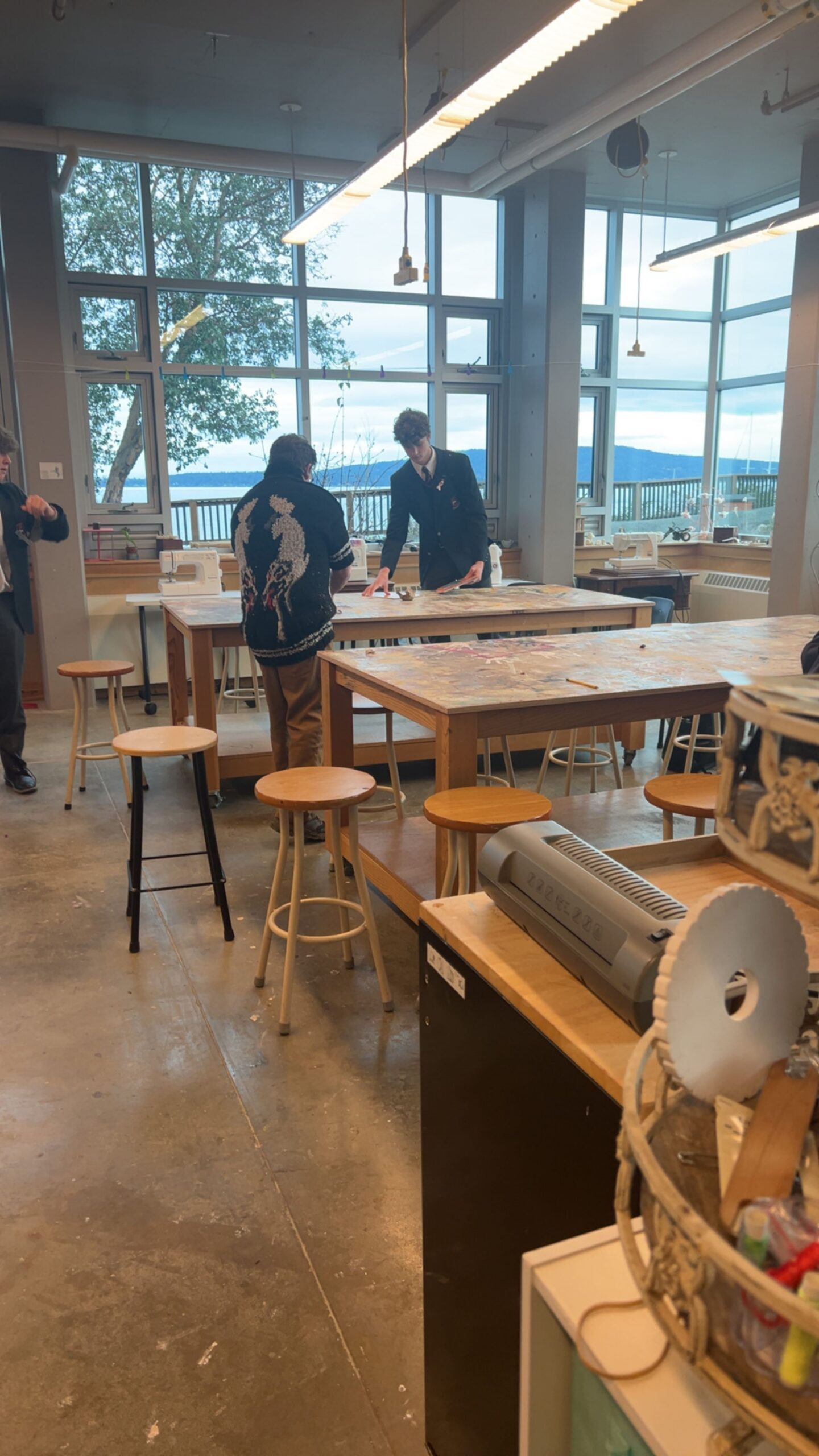
Walking into Design 11 every D block feels less like a typical school period and more like entering a professional studio. It’s a space where creativity meets construction, and so far, the experience has been nothing short of incredible. From the soft textures of textiles to the structural challenges of foam, we are learning that design is not just about the finished product; it’s about the process of bringing an idea to life.
The hands-on nature of the curriculum keeps us constantly engaged, as we are rarely sitting still; we tend to be measuring, cutting, or sketching ideas for our next design. We started the year by diving into fabrics. One of our first major tasks was designing and creating our own pair of shorts. It was a steep learning curve, involving fabric selection and cutting, pinning and mastering the sewing machines.
Teddy J, Ellis ‘28, perfectly captured the feeling when he said, “Designing my own shorts was really cool because I finally understood the amount of work that goes into the clothes we wear.” It wasn’t just about the sewing; it was about understanding how a simple fabric becomes a fashionable piece of clothing. This project required us to think about comfort, movement, and aesthetic appeal all at once.
Soon after, we shifted gears toward our paper unit paper. Using paper, we made custom Christmas cards. We also had stamps that we could use to add to the elegance of our cards. This unit gave us the chance to add a personal and handmade touch to the holiday season. It was difficult at first to get our stamps right, but once we got the hang of it, we were able to create beautiful art.
What really makes this class truly unique is the focus on growth through our design workbooks. After every unit we finish, we take some time to write reflections about the challenges we encountered and how we overcame them. Whether it was a seam that wouldn’t sit straight or a stamp that got smudged, these workbooks help us to reflect on how we problem-solved, helping us to reflect and document our evolution as designers.
Antek B, Rogers ‘28 noted “The workbook actually helps me stay organized.” This constant self-reflection ensures that we students learn from the mistakes we made, instead of just moving past them. This helps to make sure we don’t commit the same mistakes over and over again, improving the quality of our work.
Recently, we worked with foam to construct torches for a medieval fair we helped to run for the Grade 8s. This required precision and a steady hand to ensure the proportions were just right. Carving foam is a very tedious process. Once you make a cut, you can’t undo it, forcing you to really pay attention to all cuts made, which forces you to think ahead.
“I’m most excited for the wood unit. There’s something satisfying about building something meant to last,” commented Tiger L, Privett ‘28. This transition from working with soft materials to hard is going to be an interesting experience for our class. It shows how far we’ve come from craft-based projects to more industrial applications.
This entire year builds toward our final capstone project. This is the ultimate test of our skills, where we get to choose whatever we want to create and make it actually happen. Having this level of creative freedom is rare. We get to combine everything we’ve learned, from textiles to metalwork, into one cohesive piece that represents our personal style.
Design 11 has taught us that failure is simply a part of the process. By the time we reach that final project, we won’t just be students, we’ll be creators ready to take on any challenge. Every obstacle written in our workbooks serves as a stepping stone toward that final masterpiece. This class is more than just making things; it’s about learning how to think like a designer.
Miguel N, Whittall ‘28


Where Students Choose To Be
+1 (250) 743-5521
admissions@brentwood.ca
info@brentwood.ca
2735 Mount Baker Road
Mill Bay, BC, Canada V8H 1K8