

Math Teacher by Day, Community Coach by Night
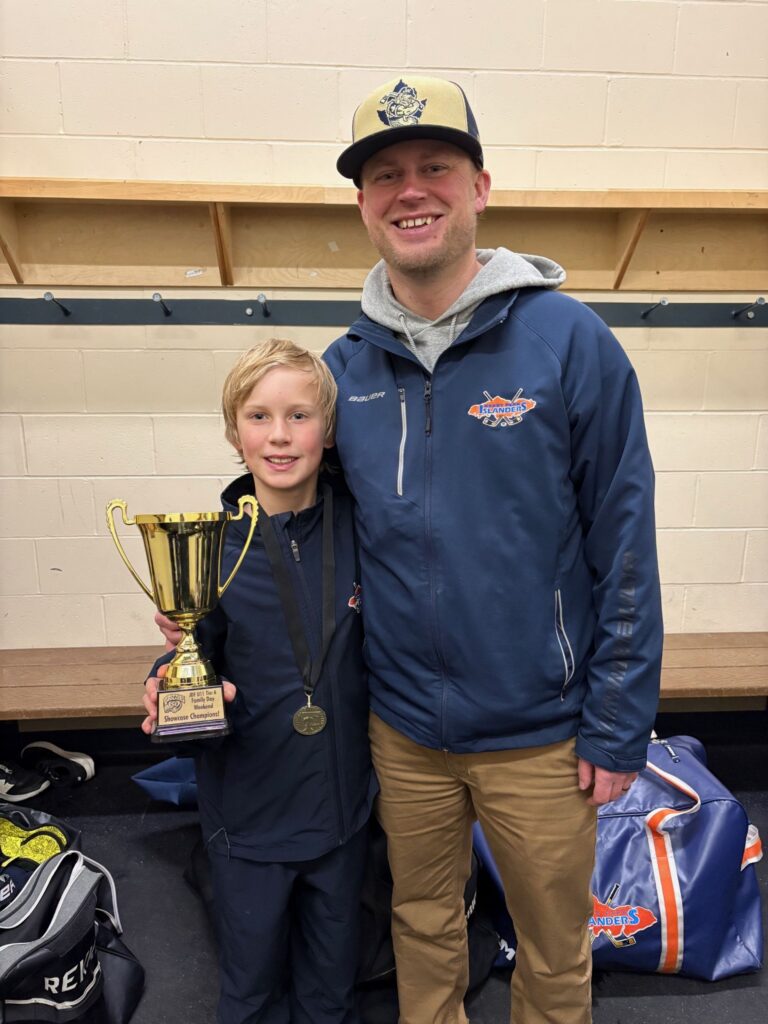
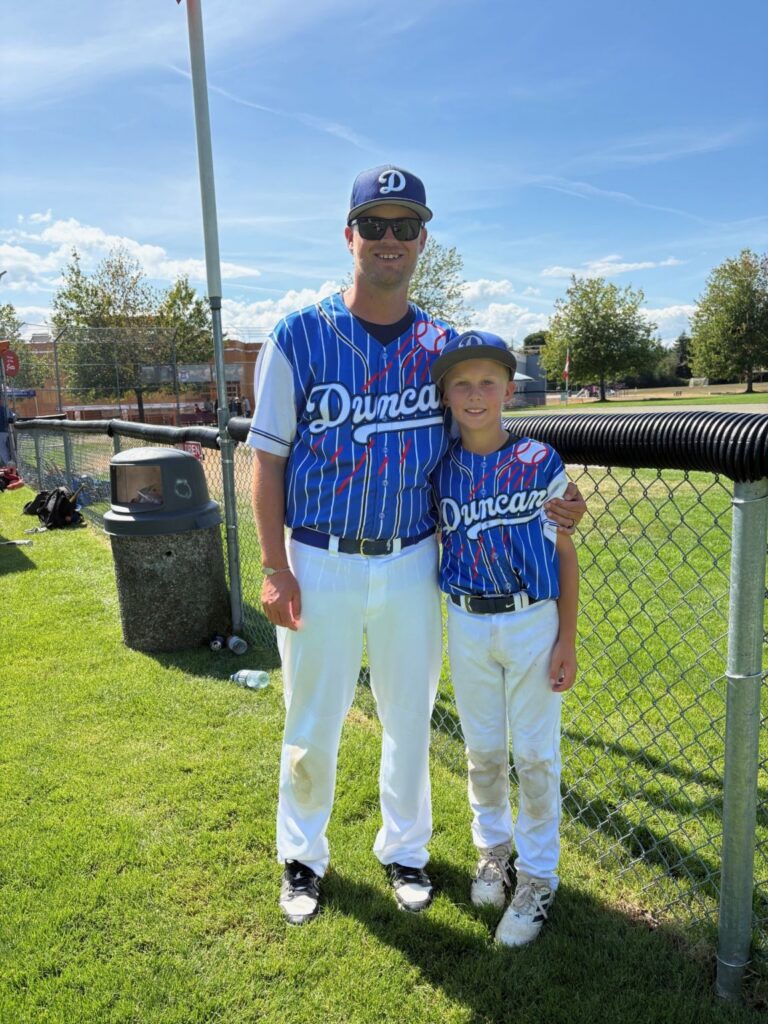
By day, Mr. Warner breaks down complex equations for his Pre-Calculus 12 students, but when the final bell rings, he trades dress shoes for ice skates or baseball cleats, a suit and tie for a tracksuit, and a No.2 pencil for a hockey stick. As a volunteer youth hockey coach and administrator with the Kerry Park Minor Hockey Association, he brings the same calculated precision to the rink, proving that leadership extends far beyond the classroom.
Mr. Warner grew up in a small town in Manitoba where his father taught elementary school and farmed on the side. His dad was quiet, a man who showed his love through action rather than words. When his father had a Friday night off, he was not out socializing. He was on a field coaching or in a board meeting, making sure the hockey schedule came together. Small-town programs were built by a handful of volunteers, and his dad was one of them.
That upbringing shaped Mr.Warner. He always knew he wanted to teach, but beyond the classroom, he carried forward a lesson: showing up for kids matters more than being the loudest voice in the room.
Mr. Warner is honest about how demanding it is to balance teaching, family, and coaching. There are 6 a.m. ice times, late-night marking sessions, and long trips to the Gulf Islands for tournaments. He keeps showing up for a personal reason: he believes the time you have with your children is finite and shrinking fast.
“I think I saw a stat the other day that said 90 percent of the amount of time you spend with your kids is over by the time they hit like 18 years old,” he said. “That assumes you’re not sending them to a place like Brentwood. Which is way earlier.”
On the ice, Mr. Warner does not coddle kids. He wants young athletes to learn hard lessons early. “Don’t hide from that emotion, but hate to lose. Have the capacity to congratulate the other team,” he said. His philosophy is direct: compete hard, but never be a jerk about it.
He adapts quickly with young players. Six-year-olds have short attention spans, so he uses bingo dabbers, draws stick figures on the whiteboard, and turns drills into games. The method is simple: figure out what works, keep them having fun, and sneak the development in.
What sets Mr. Warner apart is his organization. He has documented lesson plans from practice one through practice eighty-seven for a full season. And he does not keep it to himself. “Here’s a roadmap. Here’s what I’ve done. Here’s what I liked. Here’s what I would do differently,” he said. This year was the first time someone took what he built, modified it, and created something new to pass down the line. That is how a community program grows strong.
Last season, Mr. Warner was head coach of a Division Two team of ten- and eleven-year-olds. Six weeks in, the team they would eventually beat in the semi-finals crushed them 7-3. But the coaching staff had set big-picture goals and committed to playing everyone. By the end of the year, kids who started the season quiet and lacking confidence had found themselves and become some of the team’s best players.
The team won their division in both the regular season and the playoffs, finishing with the fewest penalty minutes out of twenty teams in the league.
“If we win, great, but that’s the reward enough,” Mr. Warner said. “Because you see a kid at the start of the year and you look at them at the end of the year and you see this massive growth in confidence. That’s why I’m doing it.”
When Mr. Warner was about twenty-six, he realized he had never properly thanked a coach from his past who had believed in him. He drove an hour to a gas station in Manitoba where his old coach worked. They had not seen each other in nearly ten years. He shook the coach’s hands and told him how much a single moment of belief had meant to him. The coach’s response was simple: he had started Mr. Warner in that game because it was his turn. Of course, he was going to start.
That belief, without hesitation, was everything. It is what Mr. Warner tries to give every kid he coaches. “I would rather err on the side of letting someone know I know you can do this,” he said.
One tradition Mr. Warner started this year is three acts of appreciation. At the end of every practice, the team finishes with kids volunteering to say something they appreciate about a teammate. “We finish on gratitude. We finish on appreciation,” he said. A few kids were too shy at first. By the end of the year, those same kids were raising their hands.
That is the story of youth hockey and baseball in this community. It is not about producing NHL or MLB stars. It is about adults who remember what it felt like to be ten years old on the ice or the diamond, and who choose to give that experience to the next generation.
Mr. Warner is one of those people. And that matters more than any trophy.
Ben A, Rogers ‘26


Where Students Choose To Be
+1 (250) 743-5521
admissions@brentwood.ca
info@brentwood.ca
2735 Mount Baker Road
Mill Bay, BC, Canada V8H 1K8