
Beautiful Bamfield
“Whoa, there’s actually civilization here!” exclaimed Beatrice F as she scanned the hamlet where the entire Grade 12 AP Biology class would be staying for the next three days.
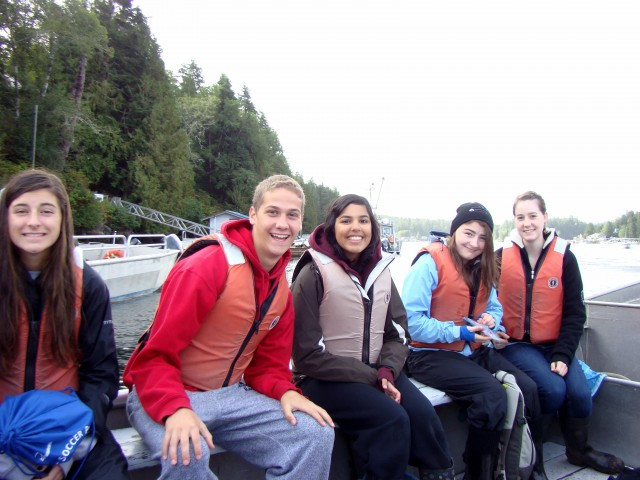
As far as first impressions go, Bamfield originally baffled us all. After a VERY BUMPY ride down unpaved roads for several hours, the grade 12s honestly descended from the bus with their mouths hanging open, gazing upon a quaint little town that was divided right down the middle by a ribbon of dark blue ocean. The homes on the hills were painted in a myriad of bright, inviting colors, and right away we all noticed how crisp and fresh the air was. Even more exciting was that fact that we all saw a sea lion splashing around in the ocean almost immediately after we arrived. Our guides explained that this wasn’t the most common sighting Bamfield!
To be honest, most of us thought that we would be stuck in the middle of the forest for three days living off the land, surviving with only the bare necessities we had managed to smuggle into the Bamfield site in our day packs. So, needless to say, we were all pleasantly surprised to discover that we had been transported to such a charming and beautiful place for our biological studies.
Our first day at Bamfield was a bit like the Brentwood Orientation experience. We all toured around the Marine Sciences Center, moved into our dorms, fed a couple of times with absolutely delicious food…and then immediately launched into an array of afternoon activities.
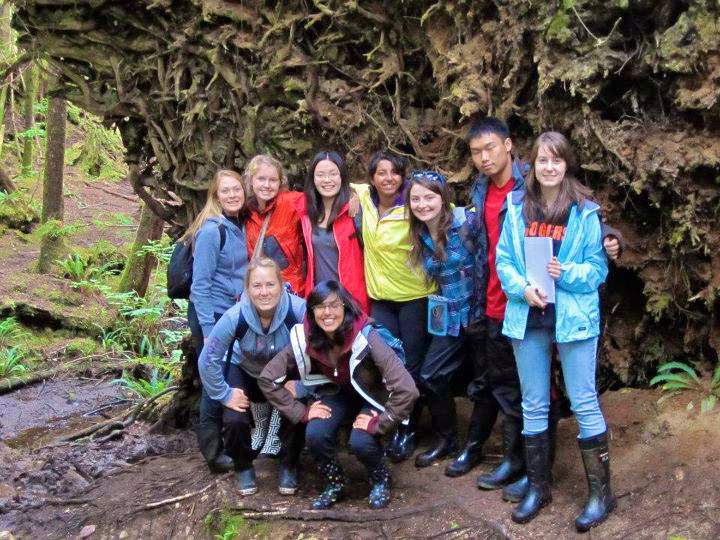
Our first rainforest hike was quite the experience, as we learned a multitude of facts about the local plant community, and the tales that make the foliage famous. The story of the Hanging Hemlock, how Skunk Cabbage can generate its own heat, “grocery learning” exhibits of licorice ferns and wild blackberry bushes. All of these plants and facts were introduced to us within 3 hours of arriving at the Bamfield site.
Throughout the hike, every student became a walking stick for a peer, as the ground of the rainforest was so untouched by humans that the roots of the surrounding trees had truly taken over, making the trail more of an obstacle course than a sidewalk. Wipeouts were fairly common, unfortunately, but we grade 12s were all fairly resilient, and decided to honor our Brentwood roots, and not retaliate against the trees, although sometimes the idea was intriguing…
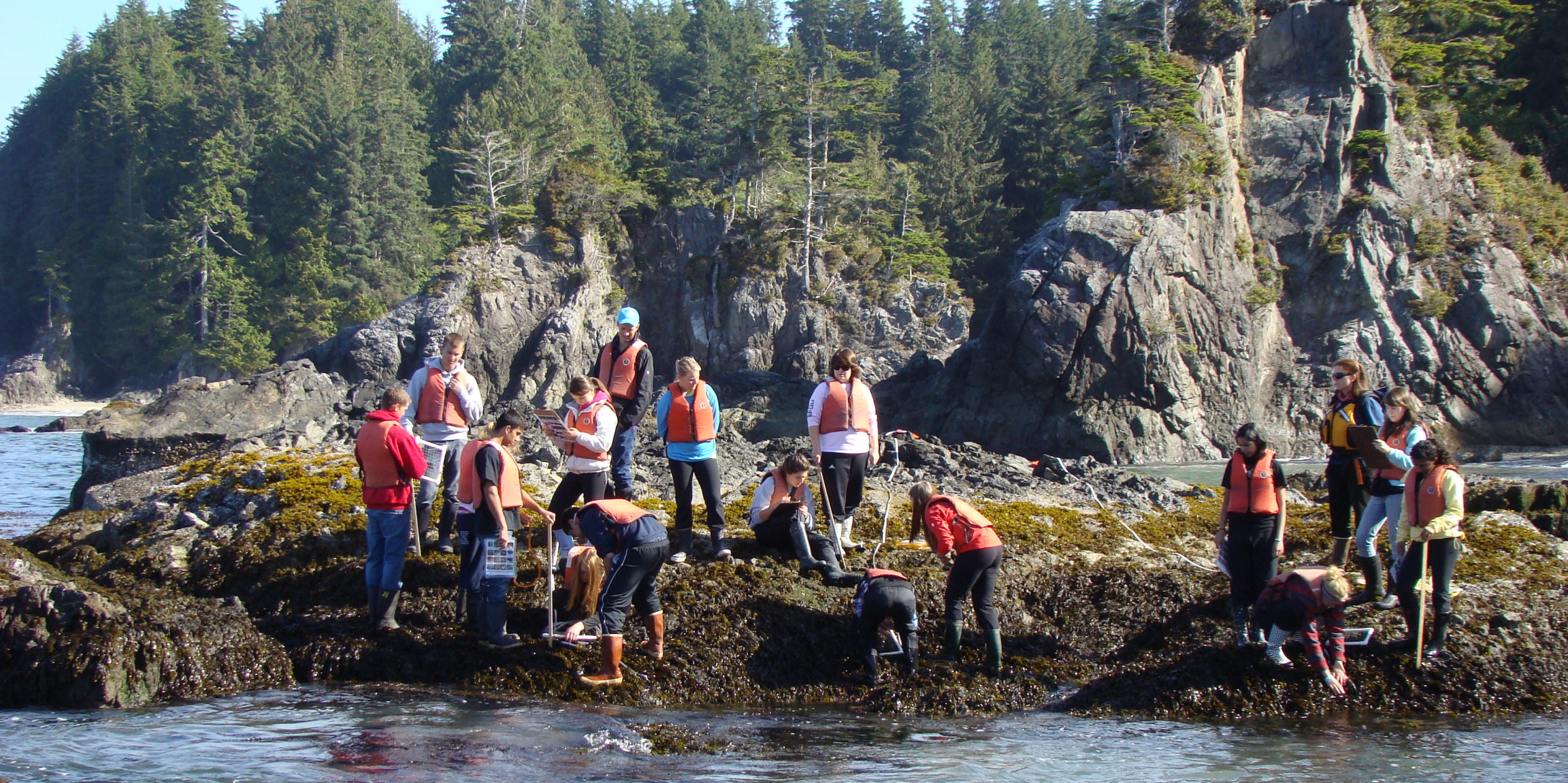
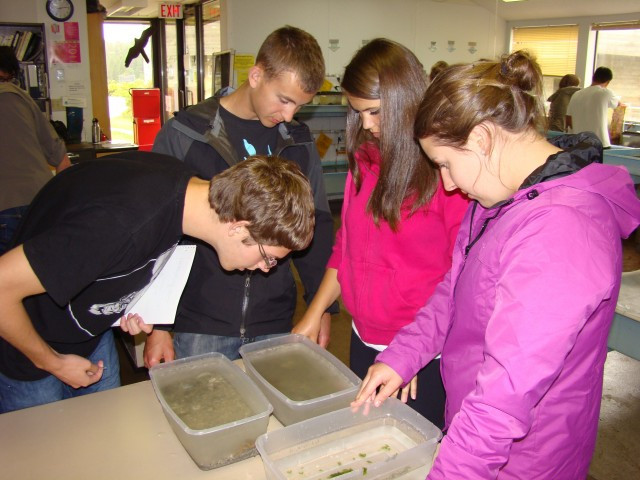
The remaining two days of our trip were spent completing a plethora of field labs from sunrise to sunset. These included kelp comparison labs, oxygen level labs (based on photosynthesis and cellular respiration), plankton labs, and even beach and intertidal surveys. They worked us hard at Bamfield, but we were all given incredible biological opportunities that many of us had never experienced in a regular school lab before. For example, the largest lab we all partook in was one that we all devised ourselves. Ordinarily, when students file into science class for a lab, a teacher has nicely printed out a sheet of detailed instructions for you to follow, and there are lists of procedures you need to get through, et cetera. At Bamfield, however, we were able to dream up our own problems to solve, and use the animals in the marine institute to help us find the conclusions to our own hypotheses. Teachers were there to assist us in these measures, of course, but we were basically on our own, performing experiments like real biologists. It may seem like a pretty basic concept, but it was a pretty big deal for us all at the time, I assure you!
One activity, however, really made the trip an unforgettable experience for many of us, and this was during the bioluminescence adventure on the second night of the trip. Whenever any of us would place our hand into the water, we ignited a chemical reaction in the plankton at the ocean’s surface, causing a wide field of glowing green lights to emanate from the previously black ocean. “It’s like a light show on your hand!” exclaimed Laura T after she withdrew her now glowing appendage from the ocean. Others compared the effects of the glowing plankton to studded emeralds, or random kryptonite effects, but let’s just sum up the experience as something truly memorable, and in every expansive meaning of the word, awesome.
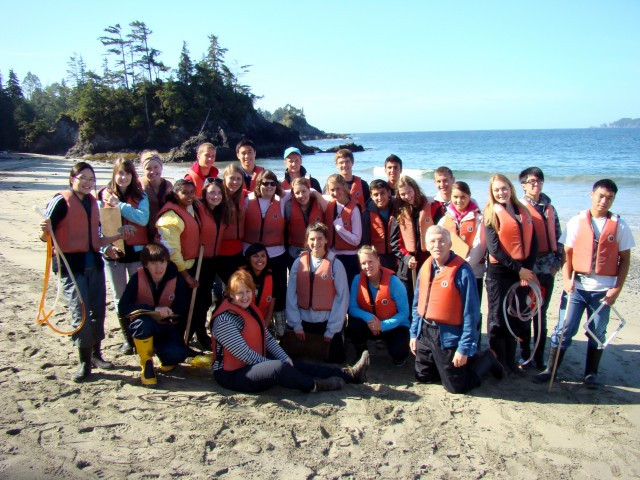
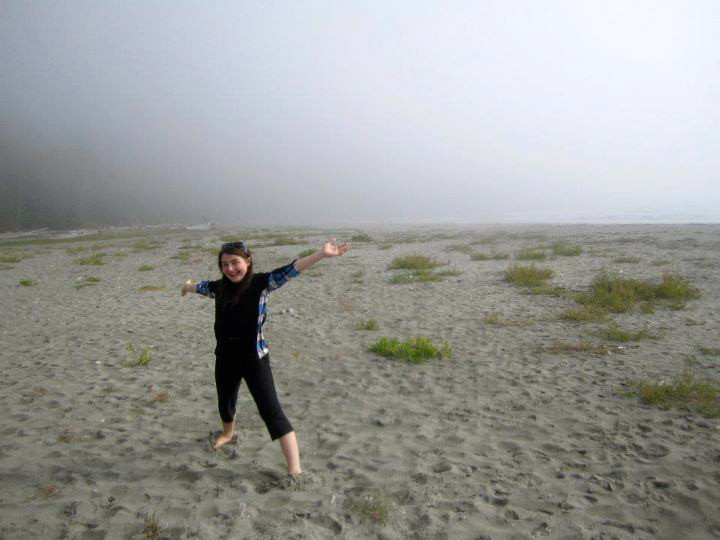
Driving away from Bamfield was a bittersweet ordeal, to say the least. We were all happy to return to the familiarity that Brentwood provides, but we were sad to say goodbye to the little sliver of one of British Columbia’s most beautiful hideaways. On our way home, however, after about 15 minutes of driving along the gravel road that had originally brought us to Bamfield, we were pleasantly surprised to stop at another location on the way back to school. At first, we were a little bit concerned about stepping into the nature preserve where we were taken, as to the naked eye, it seemed that we were all…quite literally… walking into the light (something movies have continuously warned us not to do). But when we all did cross the threshold onto the nearby beach, it was as if we had all stepped into another world, an abyss, perhaps. The fog and monochromatic color scheme certainly gave the beach we were wonderingly gazing at an other-worldly ambiance.
Now, I’m sure all of you readers are thinking that the sleep deprivation Bamfield caused finally caught up with this blogger, but I am here to tell you all that this was not the case! Beatrice F described the scene like this: “It was as if we have all stepped into another world. The atmosphere there was completely different from the scenery we had been enjoying in Bamfield for the weekend.”
So, did Brentwood students step straight into the setting of a sci-fi novel on their way back to school? No. But was our final time away from school on the “mystical, movie set beach” an epic way to again appreciate the wonders of biology? Absolutely.


Where Students Choose To Be
+1 (250) 743-5521
admissions@brentwood.ca
info@brentwood.ca
2735 Mount Baker Road
Mill Bay, BC, Canada V8H 1K8