
Acting on SGD 14
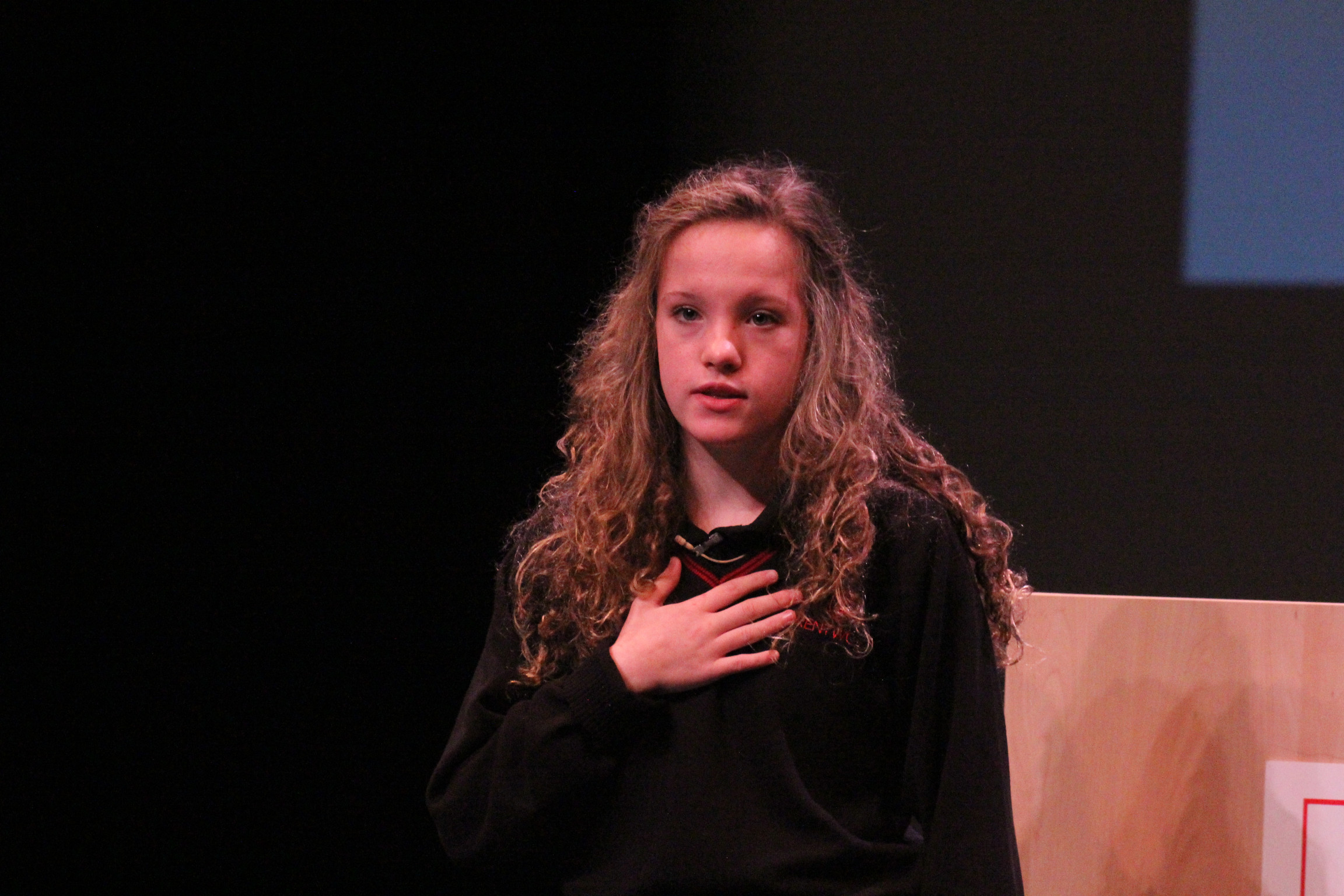
The following Meluish persuasive speech was delivered by Aria K, ’28 at Assembly this week. It went swimmingly. 😉
Picture this: the ocean, with its vibrant blue waters, filled with amazing life. Now, imagine a shadow creeping over this once-untouched vast ocean, threatening not just life under water, but also impacting us. So, what is this shadow?
I will be sharing with you the effects of marine pollution, microplastics and how they affect us.
Having spent countless hours exploring the beaches near my home, I have witnessed firsthand changes to our oceans, from fishing nets and plastic bags floating on the water to dead fish and birds with plastic in their mouths. I have also taken courses about the impact pollution has on ocean habitats and sea life.
We need to conserve our oceans and I believe each one of us has the power to help save them.
Marine pollution is a mix of chemicals and trash that comes from different sources such as rivers, sewers, industrial waste, abandoned vessels, mooring buoys, ghost fishing gear and aquaculture debris. According to the Oceanic Conservancy, 150 million metric tons are in the ocean, and 10 million tonnes are added yearly. This affects marine life because according to NOAA Fisheries, one million seabirds and 100,000 marine mammals and sea turtles get trapped and die in this waste. Locally, pollution has affected our BC coastal area, putting our resident and transient orcas in danger. Local scientists, including those from UBC in 2016 and 2018 tested these mammals and found a chemical pollutant used in toilet paper in their tissue. Tragic.
Microplastics are another form of pollutant that is less than 5 millimeters long. According to NOAA Fisheries, once a fish has ingested these, they contaminate tissues and organs. They end up in a food web passing the pollutants onto its predator. Did you know that some daily products like hand sanitizers and toothpaste have microbeads which greatly contribute to this issue? The Great Lakes are a large source of freshwater and hold 1700 microbeads per square kilometer.
The impact of pollution doesn’t just affect marine life, it affects us. Would any of you think of eating 17 credit cards? Well if you eat seafood, according to the National Institutes of Health, it is estimated you would be eating 53,864 particles of microplastics, which is the equivalent to 17 credit cards. But that’s not all. Even 83% of metropolitan tap water and 93% of bottled water, including Nestle and Evien, contain microplastics.
Conserving our oceans is important for the environment – and us. Pollution has impacted the environments we rely on for food and relaxation, but I don’t want to give up those family seaside vacations or fishing trips. Do you? We must take steps, whether it is participating in local beach clean-ups or advocating for practices outlined in the United Nations Sustainable Development Goal 14: Conserve and sustainably use the oceans, seas and marine resources for sustainable development. Each one of us must do our part to help eliminate this shadow creeping over our vast oceans.
Aria K, ‘28


Where Students Choose To Be
+1 (250) 743-5521
admissions@brentwood.ca
info@brentwood.ca
2735 Mount Baker Road
Mill Bay, BC, Canada V8H 1K8