
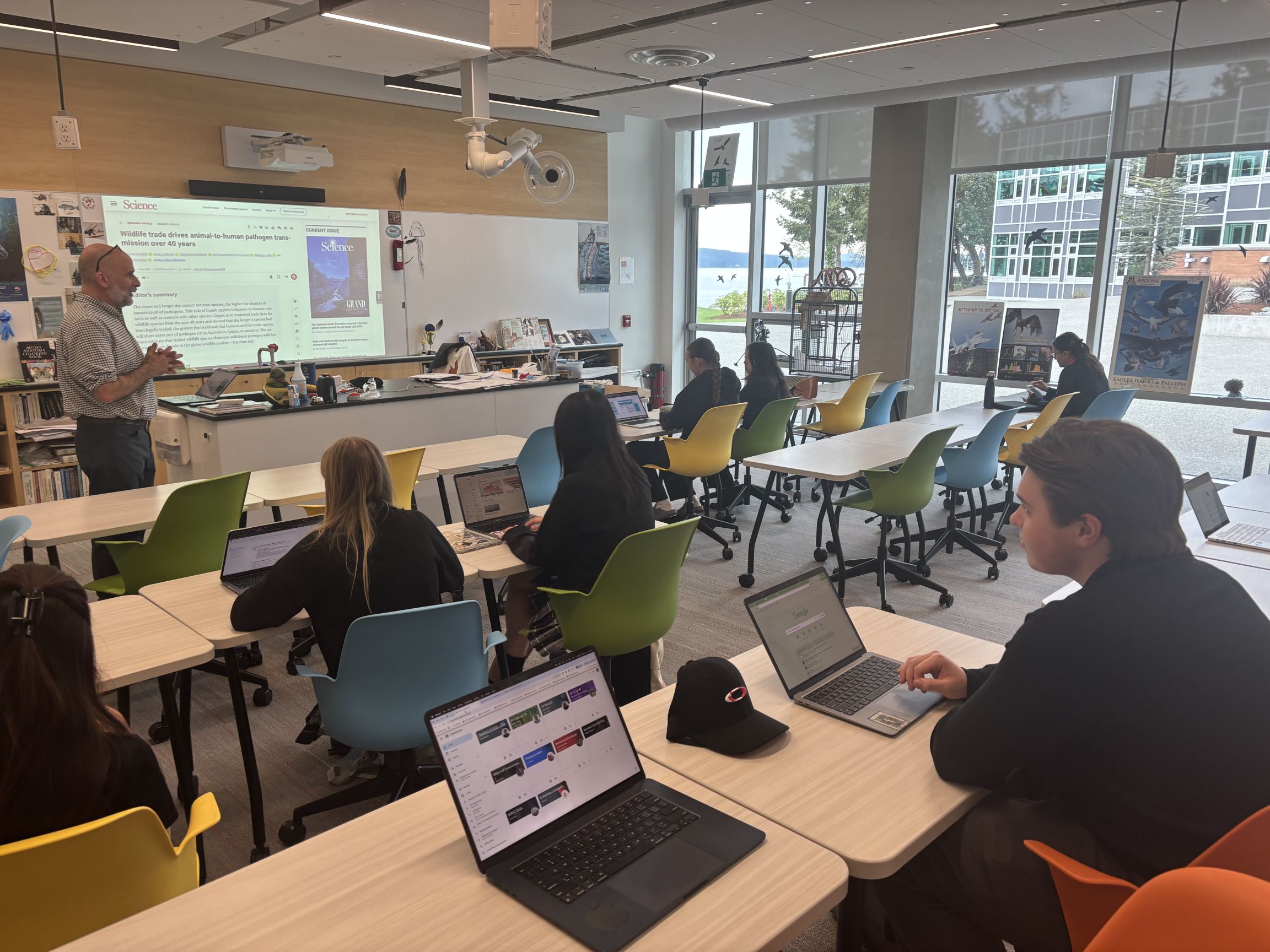
From Ecosystems to Action: AP Environmental Science Brings the Real World into the Classroom
In a time when climate change, resource management, and sustainability are shaping global conversations, environmental literacy is more important than ever. At Brentwood, AP Environmental Science is helping students build that understanding by connecting scientific concepts to the world around them. Under the guidance of Mr Miller, the course blends academic content with real-world application, turning major environmental issues into meaningful classroom discussions.
For Mr Miller, the goal goes beyond the AP Exam. “APES is a multidisciplinary course that pushes students to explore the ‘grey areas’ of environmental issues using science and critical thinking. It helps them understand real-world problems and think about how we can move toward sustainable solutions,” he explains.
The class has taken a unique path through the curriculum. Students began with Unit 4, Earth Systems and Resources, where they explored the natural foundations of the planet, from geological processes to atmospheric systems. Starting there gave them a strong base before moving into Unit 1, Ecosystems, where they examined how living organisms interact within those systems. From there, the class continued into biodiversity and population dynamics, gradually building a broader understanding of how life on Earth is interconnected.
For many students, AP Environmental Science offers more than scientific knowledge. It changes the way they think about the world and their role within it. “I love this course because it teaches me about the real world and how I can be a better citizen,” shares Johannes W, Rogers ‘27. “I didn’t realise how much I knew but at the same time didn’t know about our environment, so it has been really eye-opening for me.” The course places a strong emphasis on application, allowing students to connect what they learn in class to larger issues such as sustainability, conservation, and resource use.
Others have found the experience unexpectedly inspiring. “I love how APES made me appreciate and love our world more, but also science as a subject much more. Mr Miller’s jokes are always a hit, and the class is such a great time,” says Max C, Ellis ‘26. For students like Max, the course has not only deepened their appreciation for the environment but also sparked a greater interest in science as a potential future path.
So far, students have explored a wide range of topics, including Earth systems, ecosystems, biodiversity, populations, land and water use, and energy resources. Each unit builds on the last, helping students develop a clearer understanding of how natural systems function and how human activity affects them. Looking ahead, the class will move into atmospheric pollution, aquatic and terrestrial pollution, and global change. These units will challenge students to think critically about environmental problems and consider possible solutions.
What makes AP Environmental Science stand out is its emphasis on application. Students are not simply memorizing concepts but are learning how to think critically, ask questions, and apply their knowledge to real situations. The course encourages awareness, responsibility, and curiosity, all of which extend far beyond the classroom. Highlights of the year so far have included a field trip to the Vancouver Aquarium and to Bamfield Marine Sciences Centre, giving students the chance to connect their learning to hands-on experiences outside of school.
A huge thank you goes to Mr Miller for bringing energy and humour into every lesson and for creating a classroom environment that students genuinely enjoy. Thank you for making this class something we look forward to every day and for showing us that learning about the environment can be both meaningful and engaging. I look forward to continuing the year and growing as both a student and a more informed global citizen.
Go APES go!
William L, Ellis ‘26


Where Students Choose To Be
+1 (250) 743-5521
admissions@brentwood.ca
info@brentwood.ca
2735 Mount Baker Road
Mill Bay, BC, Canada V8H 1K8