
Making the Impossible Possible
As summer fades and the autumn rains begin to fall with the maple leaves, the creeks and rivers of Vancouver Island begin to swell with salmon as they fight their way upstream in a fantastic, inspiring journey to complete the cycle of life and death.
Salmon spawn from late October to the beginning of December. The female will lay thousands of eggs in the nest she digs. Then the male will come and fertilize the eggs. The newly-hatched salmon have food sacs attached to them and do not leave their nest during the harsh winter months. Once they have grown into camouflaged fry, they leave the nest in search of food. The silver-colored salmon, now in their ‘teen’ years, swim downstream in the swift current of the summer months towards the ocean. All the while their bodies are making changes to allow them to survive in the salt-watered oceans. Here they grow and mature and migrate great distances.
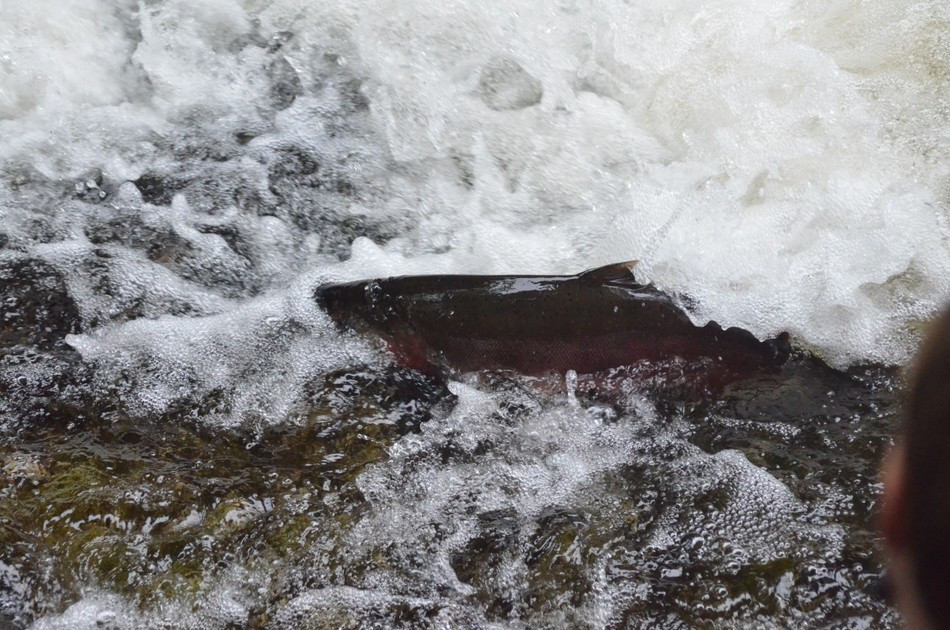
When mature adults have finished growing, they begin the upstream struggle against the thunderous river waters back to their place of birth. This is extremely difficult and can be an impossible journey in certain places. One of these impossible places is in the heart of Mill Bay, in Shawnigan Creek, beside Brentwood’s beautiful campus. This part of Shawnigan Creek did not originally have salmon; some years ago volunteers placed salmon eggs there to spawn. But as the mature salmon come back for their spawning, they are met with two tempestuous waterfalls that are impossible to defeat.
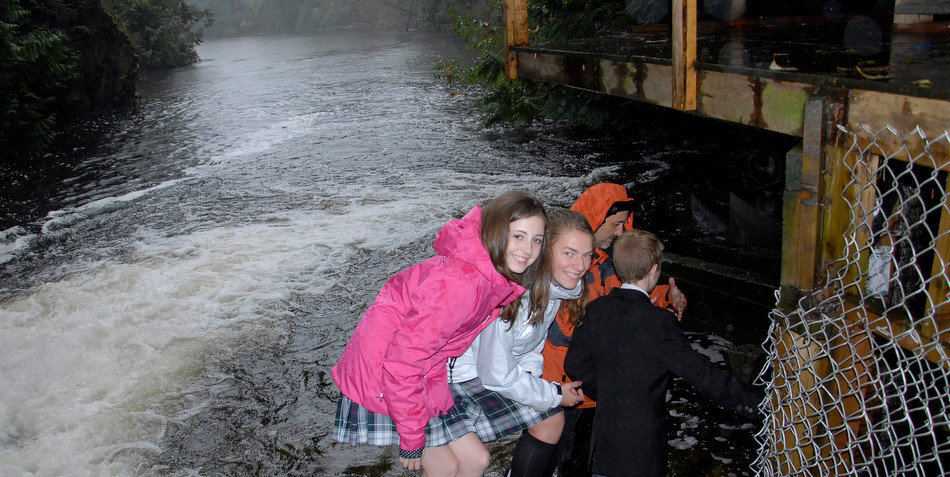
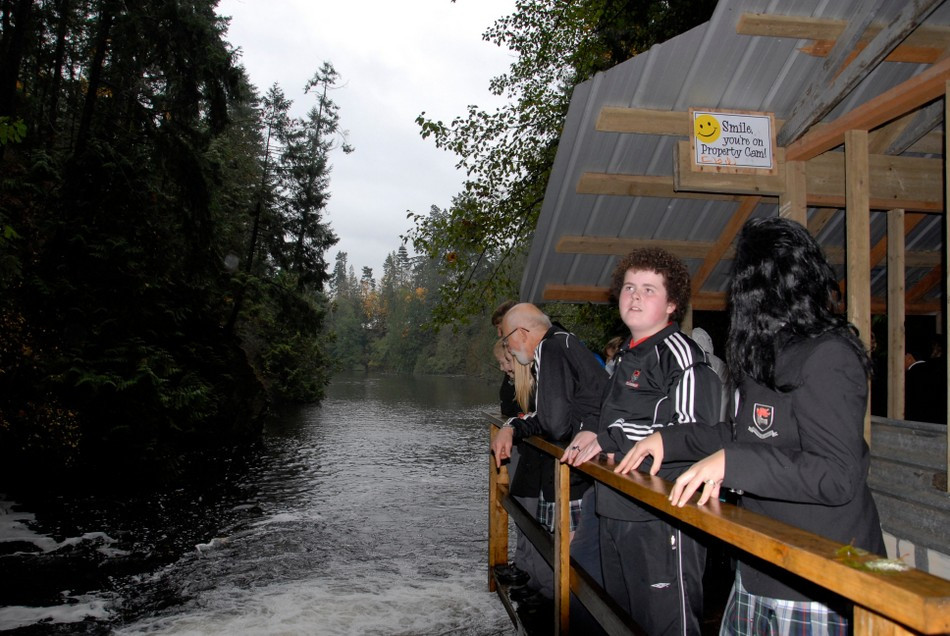
Last week Mr. Maclean took his Grade 9 class to watch what happens as the salmon try to fight their way up these falls. We cheered the salmon on as we saw them courageously jump into the waterfall only to be spit out by the plunging waters. While watching this we saw death right in front of our eyes. We wondered what could be done to aid them in their battle against the turbulent waters.
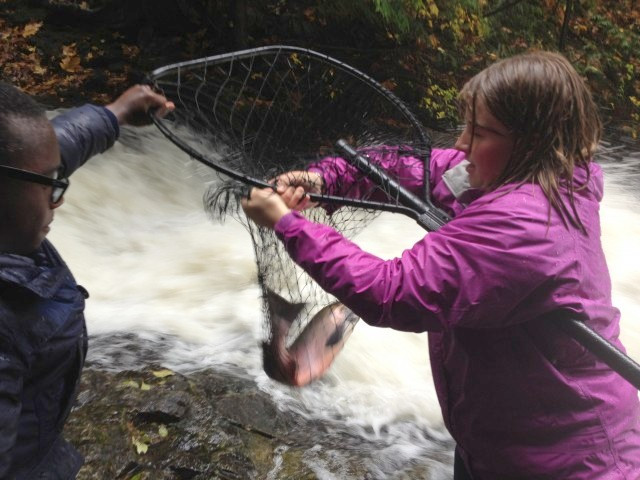
Fortunately, volunteers from the Mill Bay community have built a pathway for the salmon to enter into a cage in the water. Once there are hundreds of salmon in the cage, volunteers put the salmon into metal crates attached to ropes, lift them onto a rail (like a mini rollercoaster) and pull them up the bank to a truck that is waiting to be loaded and driven above the two waterfalls. There they are released to complete their final, life-giving journey. The community has made what was impossible now possible, allowing the salmon to spawn in the river of their birth and to keep the cycle of life flowing.
Thanks to these tireless volunteers who have stocked our creek and now sustain a vibrant salmon run.
Avi S, Alex ‘16


Where Students Choose To Be
+1 (250) 743-5521
admissions@brentwood.ca
info@brentwood.ca
2735 Mount Baker Road
Mill Bay, BC, Canada V8H 1K8