
Assessment Week
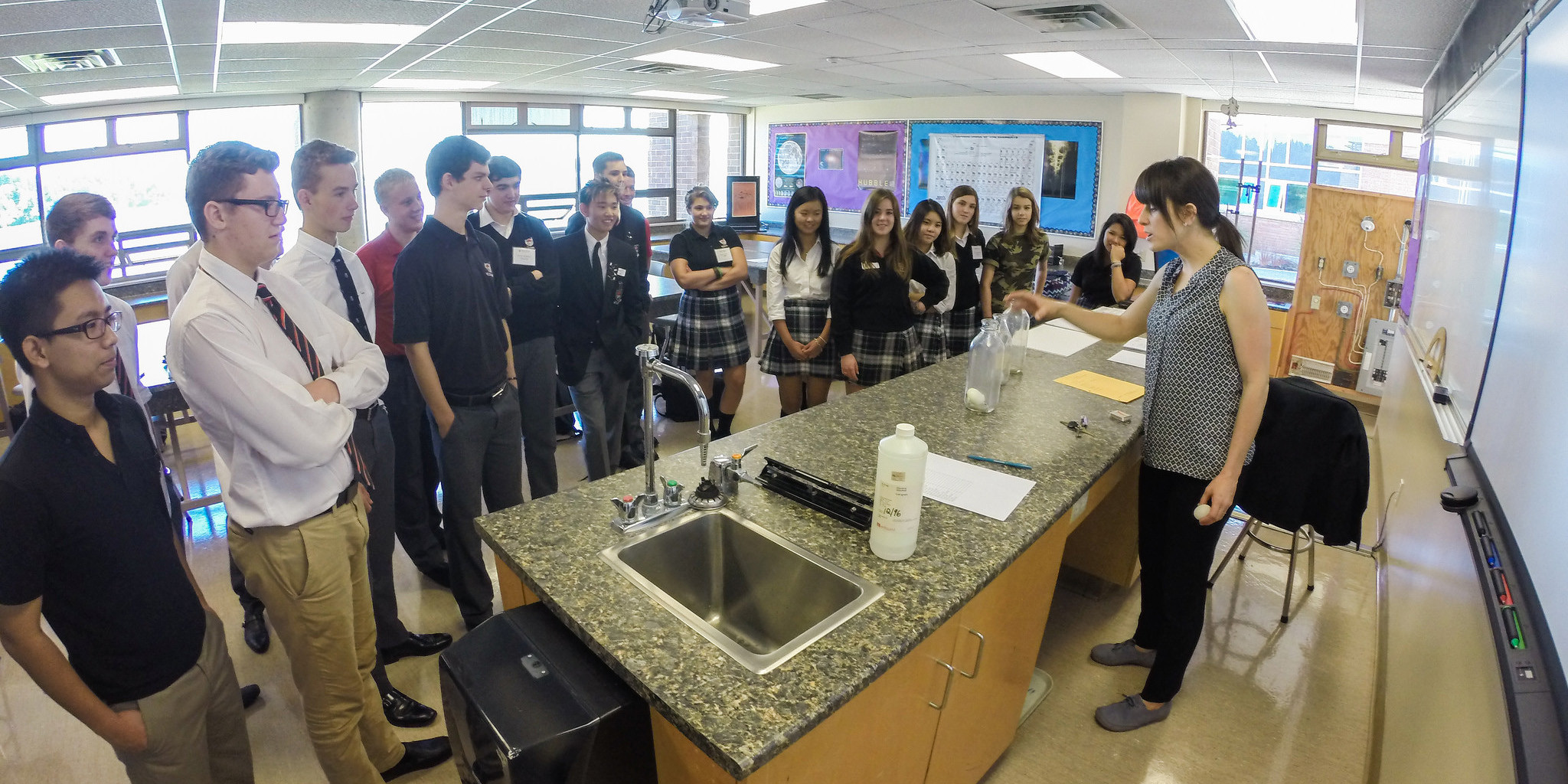
Last week students experienced what we termed “Assessment Week” with Monday, Wednesday and Friday having just two classes, each of 2 hours and 15 minutes. The intent was to allow teachers to try an assessment method that they could not fit into a regular class period. For some, this meant an academic assessment such as a longer test or a writing assignment. For others it was an opportunity to do something entirely different, such as run a scenario based lesson. Neil Robinson, for instance, in his Human Geography AP class, had students grouped into countries with an economy to run and different sets of resources and problems. These countries mirrored certain nations in terms of the resources they had, either in people, area or technologies. Students discovered the connection between these factors as they participated in the activity that required them to make a product, export it and manage the proceeds. In Social Studies 11, students were introduced to the online educational game, Democracy, in which they ran an imaginary country and had to balance a number of political, economic and social considerations in order to be re-elected. In Neil Bryant’s Law 12 course there was time to run a mock trial, students playing the parts of prosecution , witnesses, defence and judiciary, whilst the jury were members of the wider Brentwood staff drawn from administration, facilities, laundry and food services. Both students and adults enjoyed the process immensely. Many science teachers naturally used the longer blocks to run extended labs. Students appreciated being able to complete the lab and write up their results in one continuous period. Student presentations and debates formed the basis of many other classes and in mathematics there was a lot of collaborative problem solving. The innovative approaches taken by teachers and the level of student engagement that resulted from switching things up was well worth the apprehension some felt about trying out a different schedule. Currently, a task force is looking at our academic schedule and particularly the idea of having some longer classes to support a broader range of academic experiences and innovative teaching practices. Mr. David McCarthy, Director of Studies


Where Students Choose To Be
+1 (250) 743-5521
admissions@brentwood.ca
info@brentwood.ca
2735 Mount Baker Road
Mill Bay, BC, Canada V8H 1K8