
Critique
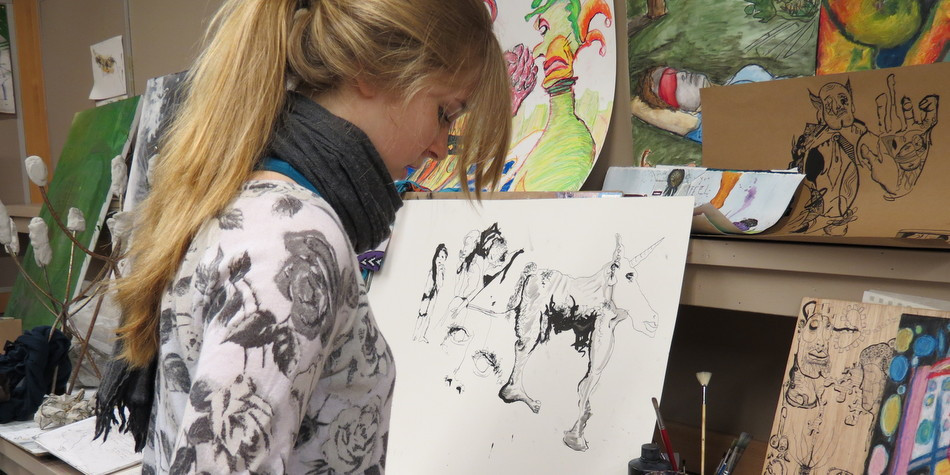
Tacked up on the wall is a piece of art: wordless poetry, a photograph, a painting. Sprawled out in the studio is a sculpture. Students approach, warily, excitedly, or nonchalantly, ready to experience the piece. Every painting, or sculpture, or other form of visual art speaks to the students differently: some pieces inspire, or scare, or persuade. As the students position themselves back in their seats, in a semi-circle facing the piece, discussion begins. Muses rise and dialogue rolls off the tongue, in what Studio Art AP likes to call ‘Critique’.
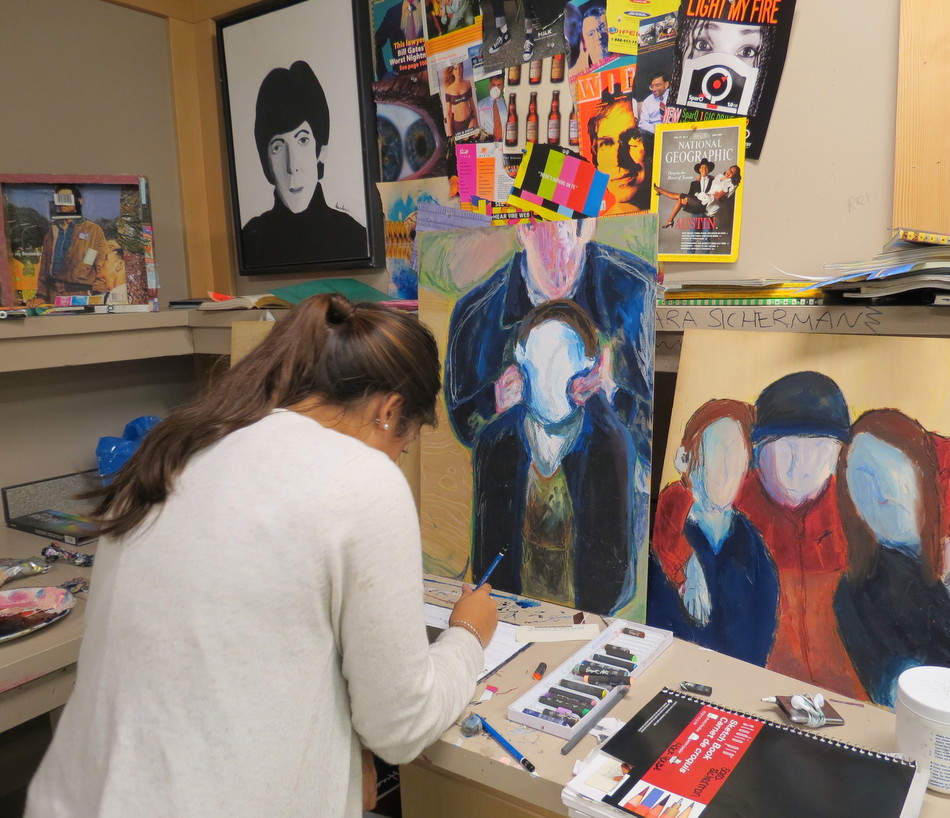
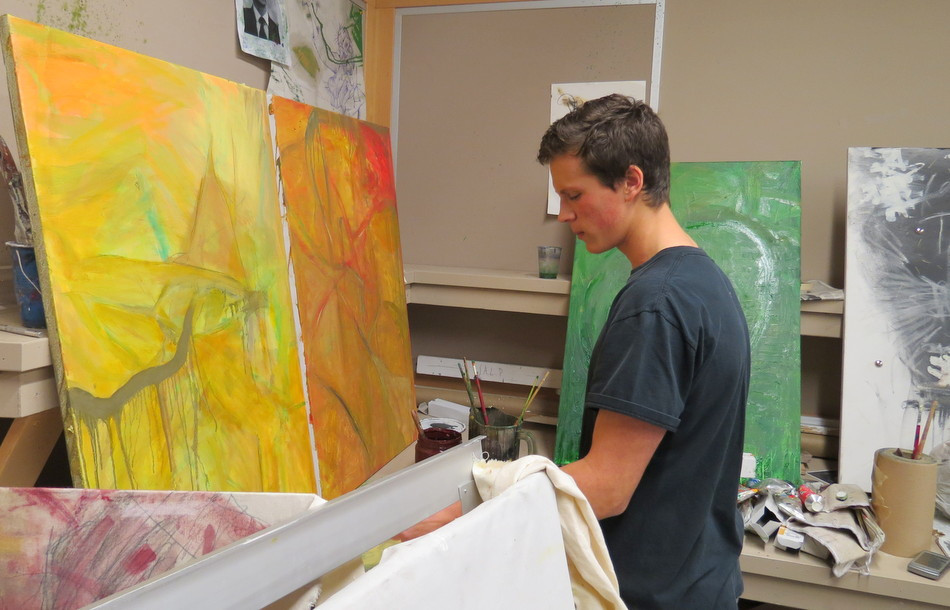
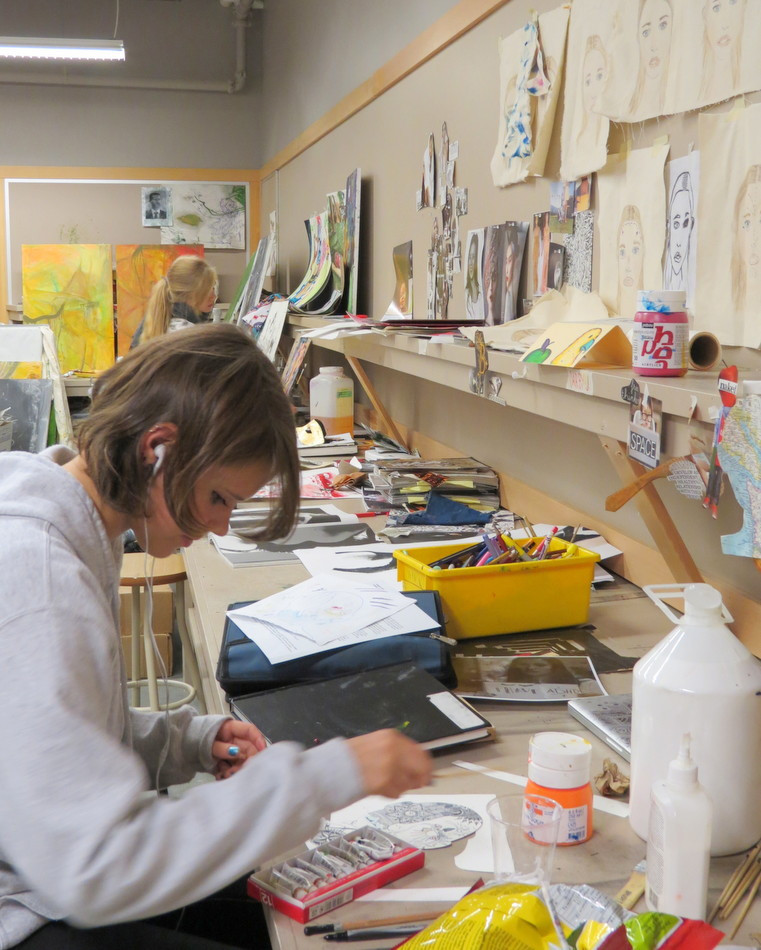
Studio Art AP consumes the artistic side of 14 students, who are all creating pieces for their portfolios. These students, with their visions and ingenuity, strive for feedback. For instructor Mr. Luna, it could be an overwhelming disaster if every question and comment was directed solely at him. Critique, a class held by the AP students every Tuesday, serves as a way to ignite inspiration through peer-to-peer feedback.
Tuesdays’ “Crit” classes fuel student-run discussion. Much like a class debate, students each have time to speak their mind about the piece at hand, and the question being posed by the artist. It creates a positive atmosphere, which welcomes every artist and allows them to hear from many perspectives.
Mr. Luna finds it a positive activity for students. “It helps students to see their own work differently, to get outside their work and see it objectively, to learn how to use language to analyze art, and also articulate what they feel when they look at art, and maybe most importantly, to arrive at an understanding of art practice that is constantly being challenged and influenced, is growing and evolving, through dialogue with others.”
This day René B pins up his charcoal sketch of a young African boy. As straightforward as the picture may seem, discussion begins, and students dig. A line behind the boy separates a shaded side from light, allowing students to each interpret this in their own way. Some see a doorway, others abstract figures, others hidden meanings.
The artist then will pose a question. In this case, Rene asks whether or not the product is finished. He receives bouts of “Yes” and “No”, and even the impervious “I don’t know”. Then comes the rounds of suggestion, from the odd to the obvious, giving Rene ideas to inspire and coalesce his work. Not all propositions are taken into account at the time, but they may be revealed later in other works by the artist.
So if you ever find yourself stuck in an art project, search for an answer. Wander into the Art AP studio, ponder, and question. The answers may lie within the words of Katie S or Rafay C, or with Sara S, or any other student that you can find painting or collaging or sculpturing away. If you ever find yourself in between, you can seek an answer from the Oracle, Mr. Luna. For all other artistic struggles, you may find what you seek in the critique of another student.
Katie R, Mackenzie ‘13


Where Students Choose To Be
+1 (250) 743-5521
admissions@brentwood.ca
info@brentwood.ca
2735 Mount Baker Road
Mill Bay, BC, Canada V8H 1K8