
Product of Nigeria
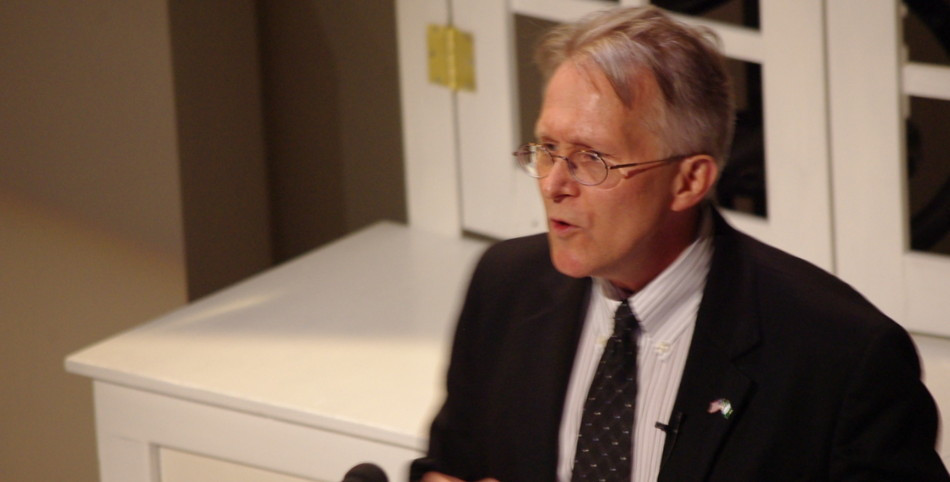
It is not every day that one gets to meet an ambassador, let alone an ambassador to a country that is a central nation of study in one of Brentwood’s Advanced Placement courses, Comparative Government and Politics. CGAP, taught by Mr. Wismer, is a course that examines and differentiates between the politics and structure of six countries: Iran, China, the United Kingdom, Mexico, Russia and Nigeria. Several weeks ago, Mr. Wismer excitedly told the class that there was a special surprise coming up. Brentwood was to host the American Ambassador to Nigeria, Mr. Terence McCulley, who would address the school for an hour, and then have a more in-depth conversation with the CGAP class afterwards.
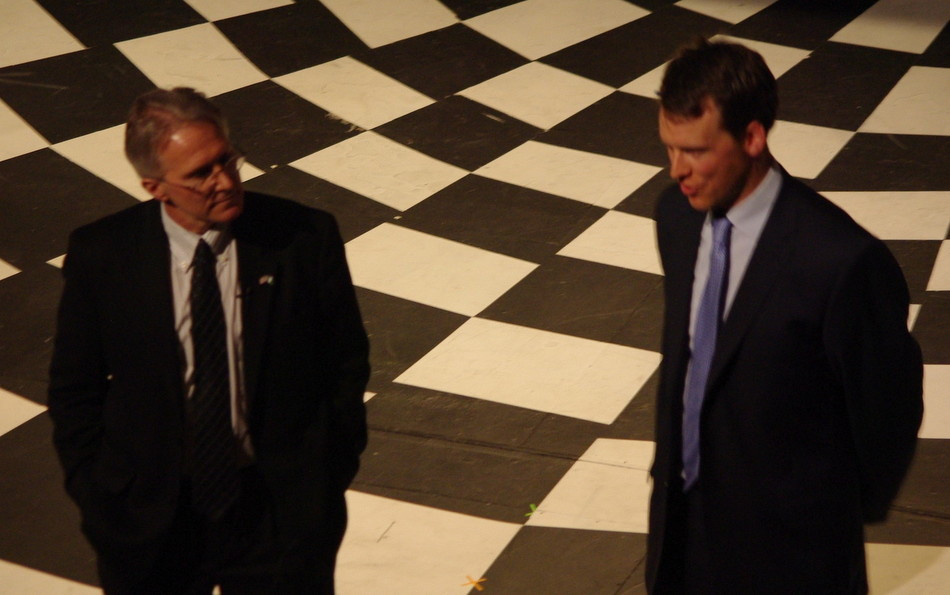
Mr. McCulley, who has quite the impressive history of government service under his belt, having served as the U.S Ambassador to Mali, and several other lofty roles in embassies and consuls in Denmark, Tunisia and India, came and spoke to the school. It is worth mentioning that his reasons for coming were not only to address the student body, but also to see his son perform in the senior acting performance of Moliere’s “The Imaginary Invalid,” in which his son was taking part. As you can see from the photos, he is on that stage.
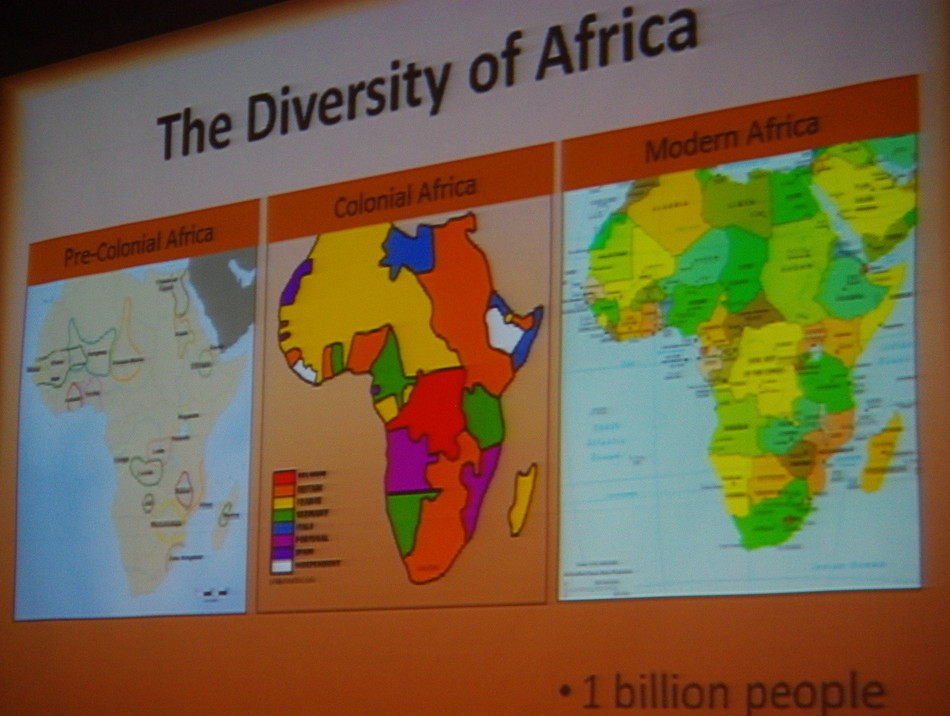
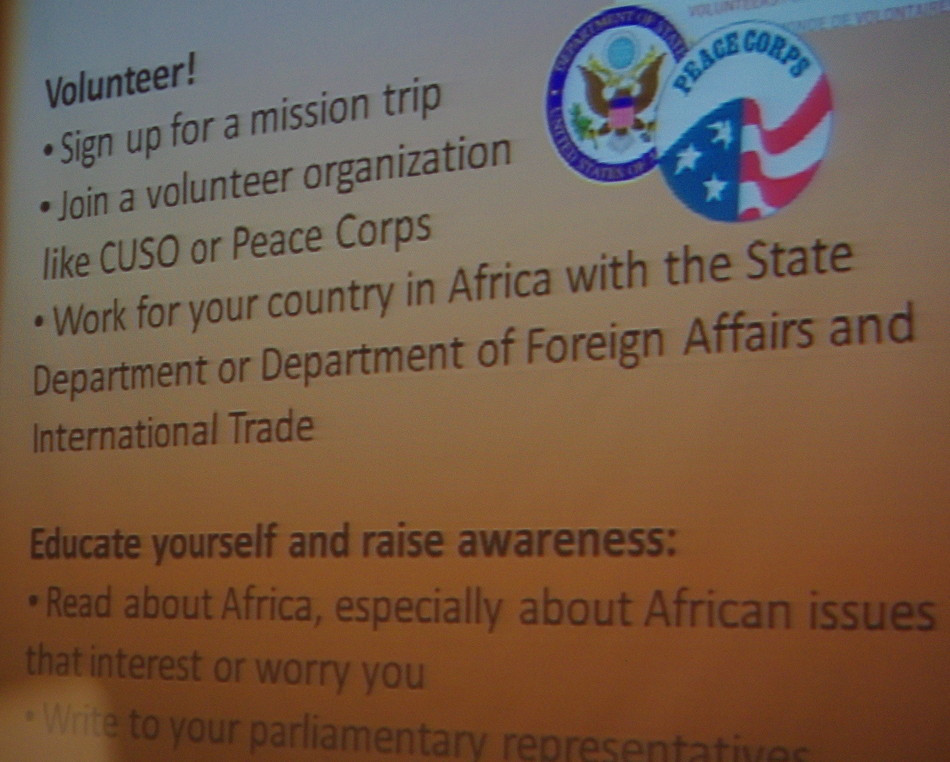
His lecture proved that he is an eloquent speaker who has a wide breadth of knowledge of, and compassion for, Africa. From an overview of the oil trade and all its effects upon the Nigerian people and their land, to the threat of desertification and the establishment of strong government and industry, Ambassador McCulley fit as much about a diverse nation, populated by 180 million people, and broken up into diverse ethnicities, cultures and religions, as he could into only an hour-long presentation. What he could not cover, including the torrent of questions from students, spilled into the next block in which he addressed the CGAP class, and Mr. Robinson’s Globalization course (who kind of snuck into the class at the last moment). The questions continued well past the bell and into lunch, as students actively participated in debates about ethnic schisms and the cleavages that exist in Nigeria as well as the problems and successes that have arisen since it gained independence from Britain in 1960.
In his speech, and his responses, Mr. McCulley also attempted to dispel much of the ignorance that exists in the West when it comes to Africa. Many complain of the cost of foreign aid, and yet Mr. McCulley put it into perspective that the monetary aid is an insignificantly small portion of the United States’ GDP. Moreover, people do not understand that while Nigeria may be one of the largest importers of BMWs in the world, the divide between the rich and the poor is so huge that countless poor fall victim to HIV and AIDS because of a lack of funds in the medical sector.
Mr. McCulley also reminded the school that diversity is key. One cannot run an economy based solely on oil. This message, however, can be extended to multiple facets of not just Nigerian politics, but also our everyday life. In a place of learning such as this, focusing only on the Brentwood bubble can lead to a lack of understanding about the rest of the world, something contrary to a school which encourages its students to be leaders of tomorrow.
Jonathan BE


Where Students Choose To Be
+1 (250) 743-5521
admissions@brentwood.ca
info@brentwood.ca
2735 Mount Baker Road
Mill Bay, BC, Canada V8H 1K8